The difference between PMT Score and NSER Survey is an important topic for people in Pakistan who want to understand how government assistance programs like BISP and Ehsaas decide eligibility.
The NSER survey collects household data, while the PMT score is calculated based on that information to assess financial status.
In this article, we will clearly explain the difference between the PMT Score and the NSER Survey, how both systems work, and why they are important for getting social welfare benefits.
What is a PMT Score in Pakistan?
Meaning of PMT (Proxy Means Test)
PMT stands for Proxy Means Test, which is a standardized method used to assess household poverty levels and determine eligibility for government assistance programs.
Instead of directly measuring actual income (which can be difficult to verify in informal economies), PMT uses proxy indicators like housing quality, asset ownership, and family demographics to estimate poverty.
The PMT Score is typically a numerical value, often ranging from 0 to 100 or higher, where lower scores indicate greater poverty and a higher likelihood of qualifying for welfare benefits.
This scoring system has become the backbone of Pakistan’s social protection programs.
Purpose of PMT Score in Government Programs
The primary purpose of the PMT Score is to create an objective, transparent method for identifying families that genuinely need government assistance.
Rather than relying on subjective judgments or political connections, the PMT system applies consistent mathematical formulas to household data. This ensures fairness in benefit distribution and helps prevent leakage to ineligible families.
The score directly determines whether a household qualifies for cash transfers, food support, or other welfare programs. Families with lower PMT scores receive priority for assistance, making it a critical metric in poverty targeting across Pakistan.
Who Uses PMT Score Data?
Multiple government organizations rely on PMT scores, including the Benazir Income Support Program (BISP), the Ehsaas Program, and various provincial social protection initiatives.
Government officials, program administrators, and NADRA (National Database and Registration Authority) personnel use these scores to verify eligibility when processing applications and benefit disbursements.
The scores are also referenced by local government representatives and field workers who identify eligible families in their communities. Understanding that PMT scores are widely used across government systems helps explain why maintaining accurate household information is so important.
What is the NSER Survey?
Full Form of NSER (National Socio-Economic Registry)
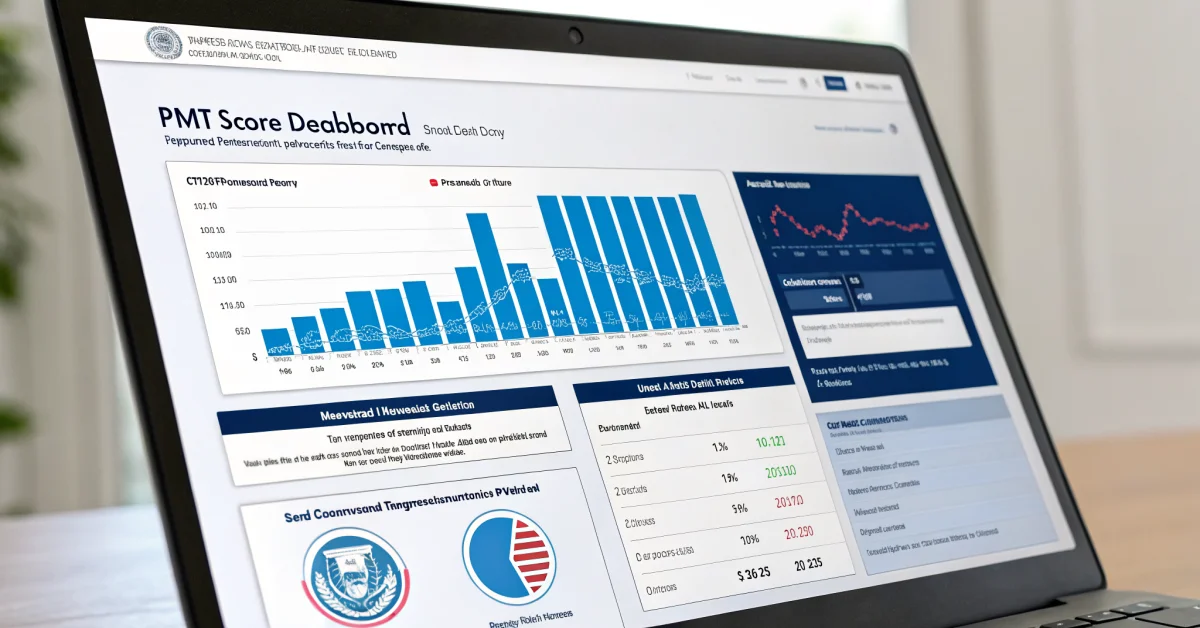
NSER stands for National Socio-Economic Registry, which is a comprehensive database of household information collected directly from Pakistani families.
The NSER is not just a survey; it is a living registry that maintains detailed records about household composition, income sources, assets, education levels, and employment status. This registry serves as the foundational data source for calculating PMT scores and administering multiple government welfare programs.
The NSER was created to replace older, less accurate methods of identifying poor families and to create a centralized, updatable system for social protection targeting.
Why the NSER Survey Was Introduced
The NSER survey was introduced because Pakistan’s previous systems for identifying poor families were inefficient, outdated, and prone to errors and manipulation.
The old methods relied on paper records, local recommendations, and incomplete information that often excluded deserving families or included ineligible ones.
By creating the NSER, the government aimed to build a modern, digitalized registry that could accurately capture household circumstances across the entire country.
The survey also allows for periodic updates, ensuring that changes in family circumstances (births, deaths, job changes, asset acquisitions) are reflected in the beneficiary database, making it more dynamic and responsive than previous systems.
Who Conducts the NSER Survey in Pakistan?
The NSER survey is conducted by trained field enumerators working for BISP (Benazir Income Support Program), with oversight from government officials and coordination through NADRA.
BISP centers and mobile teams visit households to conduct door-to-door surveys, collecting detailed information about family members, income, assets, and living conditions. NADRA also facilitates NSER registration at its offices nationwide, allowing citizens to register or update their information.
Provincial governments and local administrative bodies support the survey process, ensuring comprehensive coverage across all regions. The coordination between multiple government agencies reflects the importance of maintaining accurate NSER data for the entire social protection system.
Key Difference Between PMT Score and NSER Survey
PMT Score vs NSER Data Collection
The fundamental difference is that NSER is a data collection tool while PMT is a scoring system that uses NSER data as its input.
NSER involves surveyors visiting households and recording information through questionnaires, creating raw data about family circumstances. PMT, on the other hand, takes that collected data and runs it through a computerized algorithm to produce a numerical score.
Think of it this way: NSER is the information gathering phase, while PMT is the analysis and scoring phase that follows.
You cannot have a PMT score without NSER data, but NSER data alone does not automatically assign you a PMT score unless the algorithm has processed it.
Real-Time Score vs Survey-Based Data
NSER surveys are periodic exercises conducted at specific intervals, typically every few years or when the government decides to conduct a new registration round.
Once you complete an NSER survey, your data is recorded and registered in the system. PMT scores, however, can be recalculated dynamically if your data changes or if the government updates its scoring methodology.
Your score is not permanently fixed; it is based on the information currently in the NSER registry. If you report new information or if enumerators discover inaccuracies, your PMT score may automatically recalculate without requiring a new full survey. This makes PMT scores more fluid than static survey responses.
Eligibility vs Data Registration Difference
NSER registration makes you part of the national registry, but registration alone does not determine eligibility for benefits.
PMT scoring is what actually decides whether you are eligible. A family registered in NSER may have a PMT score that places them outside the eligibility threshold for certain programs.
Conversely, having a low PMT score means you are likely registered in NSER because that data was used to calculate your score.
The key distinction is that NSER is about inclusion in the database, while PMT is about eligibility determination based on poverty assessment.
How PMT Score is Calculated from NSER Data
Role of Household Information
The NSER survey collects comprehensive household information that becomes the foundation for PMT calculation.
This includes the number of family members, their ages, education levels, employment status, and relationship to the household head. The household composition itself is significant because family size, presence of dependents, and earning members all influence poverty assessment.
Information about who lives in the household—such as elderly members, disabled persons, or young children—affects the poverty determination because these demographics indicate support needs and earning capacity.
Every piece of household information collected in the NSER survey feeds into the PMT algorithm.
Income and Asset Indicators
Since PMT is a Proxy Means Test, it does not directly measure income; instead, it uses proxy indicators from NSER data to estimate poverty levels.
These indicators include home ownership, housing quality (roof type, wall material, flooring), access to utilities (electricity, gas, water supply), and ownership of assets like vehicles, motorcycles, or agricultural land.
The presence of these assets in a household raises the PMT score, indicating less poverty.
Income sources reported during the NSER survey—such as agricultural work, daily wages, small business, or formal employment—also factor into the calculation. The algorithm weighs these indicators to estimate a household’s economic status.
Computerized Scoring System Explained
Once NSER data is collected, it enters a computerized system that applies a standardized mathematical formula to calculate the PMT score.
The algorithm assigns weights to different variables; for example, having a brick house might receive a different weight than having a concrete house. Income indicators, education levels, and asset ownership are all processed through this formula to produce a final numerical score.
The government maintains the algorithm’s specifications and periodically updates it to improve accuracy.
Because this system is computerized and standardized, the same household data will always produce the same PMT score, ensuring consistency and fairness across all beneficiaries. This eliminates human bias from the eligibility determination process.
How the NSER Survey is Conducted
Door-to-Door Survey Method
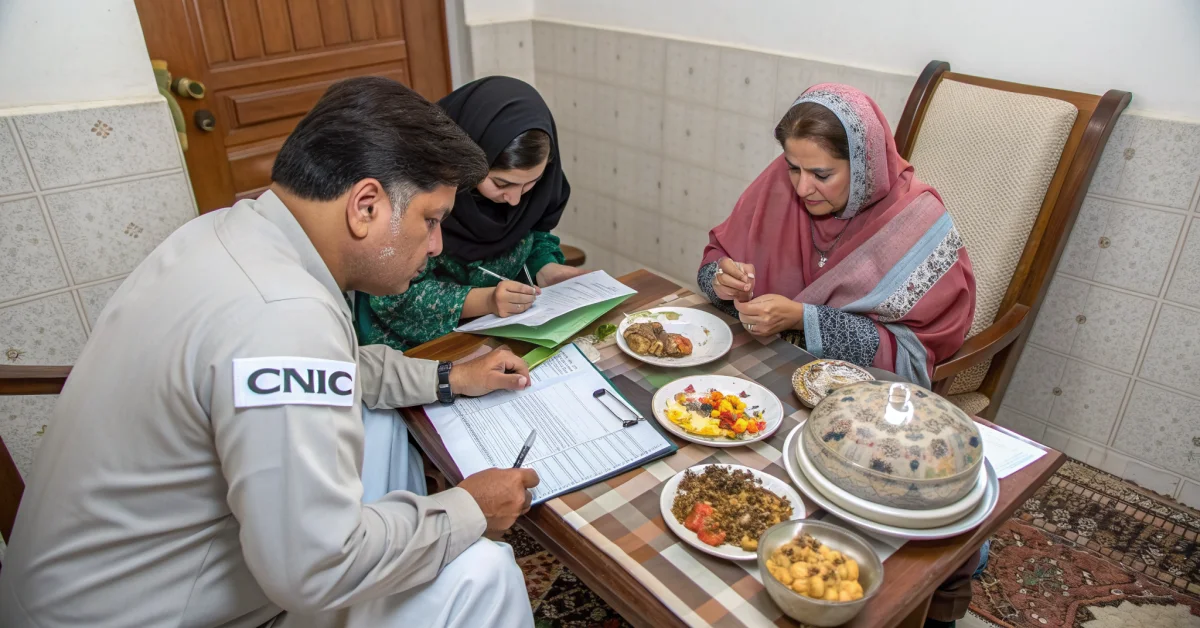
The primary method of NSER data collection is door-to-door surveys, where trained enumerators visit households and conduct detailed interviews.
The enumerator asks questions about family composition, income, assets, housing conditions, and employment, recording responses on forms or digital devices. This direct contact method allows enumerators to observe household conditions firsthand (house type, possessions visible in the home) and verify information through visual inspection.
Citizens are asked to provide honest answers about their circumstances, understanding that the information will determine their eligibility for government assistance.
The door-to-door approach ensures comprehensive coverage and the opportunity to reach even remote or underserved communities.
Registration Through NADRA and BISP Centers
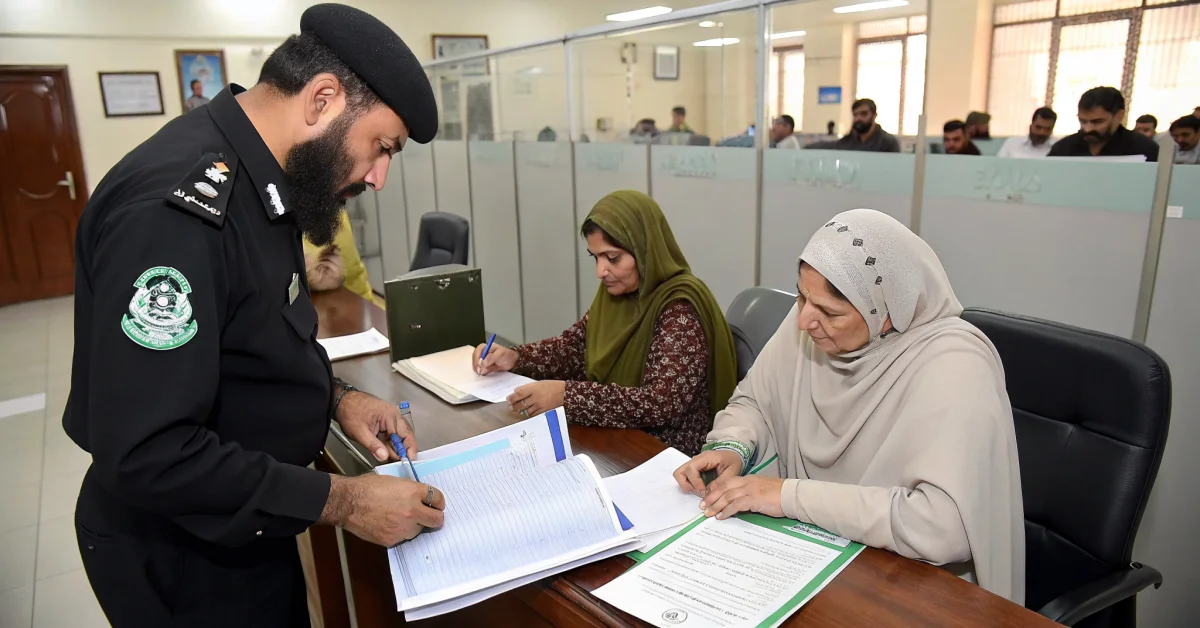
In addition to door-to-door surveys, citizens can voluntarily register or update their information through NADRA offices and BISP centers located throughout Pakistan.
This method is convenient for people who want to ensure their information is accurate without waiting for an enumerator to visit their area. The person visiting a NADRA or BISP office provides household information to an officer, who enters it into the NSER system.
This option is particularly useful for citizens who have experienced significant life changes—such as job loss, acquiring assets, or family composition changes—and want to update their records. Both registration methods feed data into the same NSER database, creating a comprehensive national registry.
Data Verification Process
After NSER data is collected, it undergoes verification to ensure accuracy and prevent fraud. Cross-checking is performed using NADRA’s database to verify identity information and ensure that individuals are not registered multiple times under different names.
Household data is reviewed for internal consistency (for example, if someone claims to be self-employed but reports zero income, this raises a flag). Enumerators may conduct follow-up visits to confirm information if discrepancies are detected.
In some cases, spot checks and field audits are conducted to verify that surveyed information matches actual household circumstances. This rigorous verification process protects the integrity of the NSER database and ensures that PMT scores are based on accurate data.
Why Both PMT Score and NSER Survey Are Important
Role in BISP and Ehsaas Programs
The BISP (Benazir Income Support Program) and Ehsaas Program are Pakistan’s major social safety nets, and both rely heavily on NSER data and PMT scores for targeting.
NSER provides the comprehensive household information needed to assess which families are poorest, while PMT scoring mechanically determines who qualifies based on objective criteria.
Without NSER data, there would be no PMT scores, and without PMT scores, the government would have no systematic way to identify eligible beneficiaries from the millions of households in the country. These two systems are interdependent, making both essential for the functioning of major welfare programs.
Identifying Eligible Families
PMT scores directly identify eligible families by comparing their scores against cutoff thresholds set by the government.
However, the accuracy of this identification depends entirely on the quality and completeness of NSER data. If a family’s NSER information is incomplete or inaccurate, their PMT score will be incorrect, potentially making them ineligible when they should be eligible, or vice versa.
Conversely, NSER data is only useful for identification when it is processed into PMT scores that provide clear go/no-go decisions for eligibility.
The combination of comprehensive data (NSER) and systematic scoring (PMT) creates an effective targeting mechanism.
Updating Beneficiary Records
Government welfare programs must periodically update beneficiary records to account for changes in family circumstances.
Conducting new NSER surveys allows the government to capture these changes and recalculate PMT scores accordingly. A family that was ineligible five years ago may now qualify due to job loss or economic hardship, while another family may no longer qualify due to income improvement.
By refreshing NSER data through new survey rounds, the system ensures that benefits continue to reach those truly in need and that previously ineligible families get a chance to qualify.
This continuous updating is why NSER surveys are not one-time events but periodic exercises.
Can Your PMT Score Change After NSER Survey?
When New Survey Updates Your Score
Yes, your PMT score can definitely change after a new NSER survey. When enumerators recollect household data—discovering that you have acquired assets, lost a job, added family members, or improved your housing—this new information is entered into the system and used to recalculate your PMT score.
If the new survey reveals that your circumstances have improved, your score may increase (indicating less poverty), potentially making you ineligible for programs where you previously qualified.
Conversely, if the survey documents worsening circumstances, your score may decrease, improving your eligibility. The new PMT score reflects your current situation rather than your past circumstances.
Impact of Data Correction
If the new NSER survey discovers errors in your previously recorded data—such as incorrect information about assets, family size, or income—these corrections will directly impact your PMT score when it is recalculated.
For example, if a previous survey incorrectly recorded that you owned a motorcycle when you did not, correcting this error would lower your PMT score. Similarly, if previous data underestimated your family size or education level, the correction would change your score.
The direction and magnitude of score changes depend entirely on what corrections are made. Citizens should welcome data corrections because accurate information ensures fair eligibility determination.
Automatic Recalculation Process
The recalculation of PMT scores after NSER updates happens automatically through the computerized system.
Once corrected or new NSER data is entered into the database, the scoring algorithm immediately processes it and produces an updated PMT score without requiring any manual intervention.
This automatic process ensures that changes are reflected promptly in the system without delays or human error. You do not need to apply for a new score or take any action; the system handles recalculation behind the scenes.
This automation is one of the advantages of the computerized PMT system—scores are always based on the most recent available data in the NSER registry.
Common Confusion Between PMT Score and NSER
“Are They the Same Thing?”
No, they are not the same, and this is the most common source of confusion. NSER is a survey (data collection), while PMT is a score (data analysis and numerical output).
Think of it like health screening: the blood test is equivalent to NSER (gathering medical data), and the test results are equivalent to PMT (analyzing data to determine health status).
You can have NSER data without a PMT score if the data has not been processed, but you cannot have a PMT score without NSER data because the score must be calculated from something. They are sequential and interdependent, not parallel or interchangeable.
“Which One Decides Eligibility?”
The PMT Score decides eligibility, not the NSER survey itself. Simply completing an NSER survey does not make you automatically eligible for benefits; your resulting PMT score determines that.
The government sets eligibility thresholds (for example, “PMT score below 30 qualifies for BISP”), and only if your PMT score falls below that threshold are you eligible. The NSER survey provides the information, but PMT scoring provides the eligibility decision.
This distinction is crucial because it means that being surveyed is just the first step; the actual eligibility outcome depends on your calculated score.
“Do I Need Both?”
For practical purposes, yes, you need both systems to work together for you to access benefits. You need to be surveyed (NSER) so that your data enters the system, and that data must be processed into a PMT score to determine your eligibility.
If you are not in NSER, you have no PMT score and cannot qualify for government assistance programs. If you are in NSER but have not been assigned a PMT score yet (due to processing delays), you cannot yet be assessed for eligibility.
Most citizens do not need to think about both systems separately; they simply need to ensure their household information is accurately recorded so that when PMT scores are calculated, they reflect their true circumstances.
How to Check Your PMT Score After NSER Update
Online Method via CNIC
You can check your PMT score online through the official BISP portal (bisp.gov.pk) by entering your CNIC (Computerized National Identity Card) number. The online portal displays your current PMT score along with your household information that was used to calculate it.
This is the quickest and most convenient method, accessible from any device with an internet connection. Simply navigate to the PMT score lookup section, enter your CNIC, and your score will appear within seconds.
If your score shows as “not found,” it may mean that your data has not yet been processed or entered into the system.
8171 SMS Service
The 8171 SMS service (free text message to “8171”) is another method to check your PMT score if you do not have internet access. You send a text with your CNIC number to 8171, and the system responds with your PMT score via SMS.
This service is accessible to anyone with a mobile phone, making it inclusive for citizens in remote areas or those without internet connectivity.
The response is usually immediate, though there can occasionally be slight delays during peak usage times. This service is particularly useful for citizens in areas with limited internet infrastructure.
BISP Portal Checking Guide
To use the BISP portal effectively, visit bisp.gov.pk, locate the “Check PMT Score” or “Check Eligibility” section, and enter your CNIC and other required information (such as your phone number).
The portal will display not just your PMT score but also your eligibility status for various BISP programs and a breakdown of the household information used in the calculation.
If you find errors in the displayed information, the portal often guides how to update your data. The portal also shows when your data was last updated, which helps you understand if your score is based on recent or older information.
What to Do If Your Data in NSER is Incorrect
How to Update Household Information
If you notice errors in your NSER data, you should take action to correct them as soon as possible because inaccurate data leads to incorrect PMT scores.
You have several options: visit your nearest BISP office or NADRA center with your CNIC and updated household information, contact BISP through their toll-free helpline (1-800-BISP-111), or wait for a field enumerator to visit if a new survey round is underway.
When updating information, bring supporting documents that prove your household circumstances. The update process is generally straightforward, but it may take a few days for the corrections to be entered into the system and for your PMT score to be recalculated.
Visiting the BISP or NADRA Office
Visiting a BISP office or NADRA center in person is often the most direct and reliable method to correct NSER data.
Bring your original CNIC, proof of address (utility bill or lease agreement), and any documents related to the information you are correcting (such as property deeds if disputing asset ownership).
A staff member will listen to your concerns, review your documents, and update your information in the system. After the update, ask for confirmation that the changes have been saved. This in-person visit creates a record of the correction and allows you to communicate any complex circumstances directly.
Required Documents for Correction
The specific documents needed for NSER corrections depend on what information you are updating. For changes in household composition (births, deaths, marriages), bring the relevant vital registration certificates.
For income or employment corrections, bring employment letters, tax documents, or business registration certificates.
For asset corrections, bring property deeds, vehicle registration documents, or utility bills showing ownership.
For address corrections, bring a utility bill, lease agreement, or property tax document.
While the requirement list may seem extensive, you do not necessarily need all documents; bring whatever you have that supports your claim, and the BISP or NADRA officer will advise if additional documentation is needed.
FAQs About PMT Score and NSER Survey
Is the NSER survey mandatory for the PMT score?
Yes, the NSER survey is effectively mandatory if you want to access government assistance programs that use PMT scoring. Without NSER data, there is no PMT score, and without a PMT score, you cannot be assessed for eligibility. The government conducts periodic NSER surveys to ensure comprehensive coverage, but in practice, citizens can also voluntarily register at BISP or NADRA centers. While technically the government does not physically force people to participate, choosing not to participate means you cannot access welfare benefits tied to PMT scoring.
Can PMT score exist without NSER?
No, a PMT score cannot exist without NSER data. The score is mathematically calculated from household information collected in the survey. There is no other source of data that the algorithm uses, so without the survey data, there is nothing to calculate a score from. If your household information is not in the NSER database, you will have no PMT score in the system. This is why registration or survey participation is the essential first step in the benefit eligibility process.
How often is NSER updated?
The frequency of NSER updates depends on government policy and resource availability. Typically, comprehensive NSER surveys are conducted every 3-5 years, with targeted updates or specific registrations happening more frequently. Between full survey rounds, citizens can update their information through BISP centers and NADRA offices. The exact schedule may vary by province or program. Citizens can check the BISP website or contact their local BISP office for information about when the next survey round is expected in their area.
Who is eligible for NSER registration?
All Pakistani citizens living in Pakistan are eligible to be part of the NSER. The registry is designed to be comprehensive and inclusive, capturing data about all households regardless of income level. Even wealthy households may be in NSER, though they will have higher PMT scores reflecting their better circumstances. Special attention is paid to vulnerable populations, including low-income families, rural communities, elderly persons, and disabled individuals. There is no formal exclusion criterion for NSER registration; the goal is to create a complete picture of Pakistan’s population for targeting and program administration purposes.
Final Verdict: PMT Score vs NSER Survey
Simple Summary for Better Understanding
To summarize simply: NSER is how the government collects household information (survey), and PMT is how it analyzes that information to determine poverty and eligibility (score). NSER is the tool for gathering data, while PMT is the tool for making decisions based on that data.
You need accurate NSER data so that your PMT score correctly reflects your economic circumstances.
When new NSER surveys are conducted or when you update your information, your PMT score recalculates automatically. Both systems work together seamlessly, though for citizens, the practical outcome is: participate in NSER surveys, verify your data is accurate, and monitor your PMT score to understand your eligibility for government assistance programs.
Why Both Systems Work Together
PMT and NSER are not competing systems or alternatives; they are complementary components of Pakistan’s social protection infrastructure. NSER provides the raw information about households’ circumstances, while PMT provides the objective, transparent mechanism for turning that information into eligibility decisions.
This separation of data collection from scoring helps prevent bias and ensures fairness. The system’s strength comes from combining comprehensive household-level surveys with computerized, standardized analysis.
By understanding how NSER and PMT work together, Pakistani citizens can better engage with the social protection system, ensure their information is accurate, and maximize their chances of accessing benefits they deserve.

I am Shan ALI, a Pakistani digital content creator with a strong interest in public welfare, government programs, and making official information accessible to ordinary citizens.